Why September Is the Best Month to Start a Weekend Tradition
How to start a weekend tradition with your partner that survives October. September gets you the first weekend. Design gets you the rest.
Read more →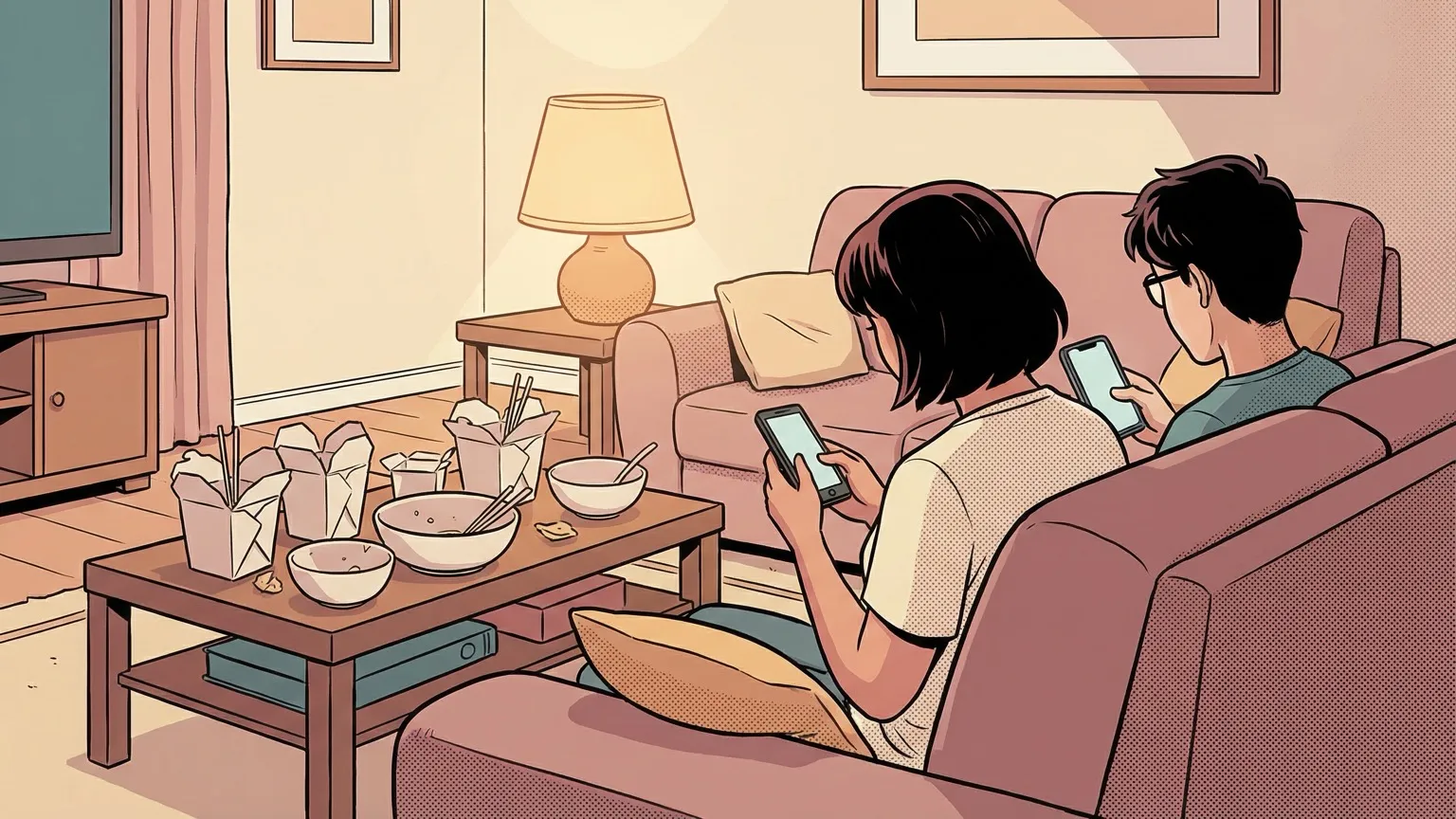
It's Friday at 7 PM. You're both on the couch. One of you says, "So... what do you want to do this weekend?" The other says, "I don't know, what do you want to do?" You volley this back and forth a few times, pull out your phones, scroll through some options, mention a restaurant neither of you commits to, and eventually land on takeout and whatever's autoplaying on the TV. Not because you wanted that. Because deciding felt like too much.
This isn't a character flaw. It's not that you don't love each other or don't care about spending time together. If you've read the research on why intentional time matters, you already know the stakes. The problem is simpler and more mechanical than that: by Friday evening, you've used up the part of your brain that makes decisions.
Psychologists call it decision fatigue — the measurable decline in decision quality after a long stretch of choosing things. And a workweek is nothing but choosing things: what to prioritize, how to respond, when to push back, what to eat, which email matters.
A 2018 study by Sjåstad and Baumeister tested this directly. They surveyed shoppers outside IKEA — some on their way in, some on their way out. The ones who'd just spent an hour making decisions about furniture were 27% less likely to commit to making plans than those who hadn't started yet. Not because they didn't want plans. Because the act of planning felt like one more thing to push through.
That's the trap. The question "what should we do this weekend?" tends to arrive at the exact moment you have the least capacity to answer it. So you default to nothing. And "nothing" becomes the pattern.
Here's the thing nobody wants to hear: most couples believe spontaneous experiences are more satisfying than planned ones. And most couples are wrong — not about what they value, but about what actually delivers.
A 2024 study by Kovacevic and colleagues tracked 121 couples over 21 days using daily diaries. Going in, 40% of participants said spontaneity was better, while only 9% endorsed planning. But when the researchers measured actual satisfaction day by day, there was no significant difference between planned and spontaneous experiences. None. The cultural preference for spontaneity didn't match reality.
This isn't an argument against spontaneity. It's an argument against the idea that planning somehow ruins things. It doesn't. What ruins things is the gap between wanting to do something and actually doing it. A meta-analysis by Gollwitzer and Sheeran found that people who specified when, where, and how they'd act on an intention — "Saturday afternoon, that new trail" instead of "we should do something outdoorsy sometime" — were dramatically more likely to follow through. The effect size was medium-to-large across 94 studies.
"We should do something fun this weekend" is a wish. "Saturday afternoon, let's check out that place you mentioned" is a plan. The difference in follow-through is enormous.
There's a bonus to planning that most people overlook entirely: the anticipation itself is pleasurable.
Kumar, Killingsworth, and Gilovich ran a large experience-sampling study in 2014, pinging over 2,000 adults at random moments to capture what they were thinking and feeling. People who were looking forward to a planned experience — a trip, a dinner, a concert — reported significantly higher momentary happiness than people thinking about upcoming purchases or nothing in particular. The anticipation wasn't anxiety or impatience. It was excitement.
So when you and your partner decide on Wednesday that you're going to try that new place on Saturday, you're not just solving a logistics problem. You're giving yourselves three days of low-grade shared excitement. That's free happiness, and "going with the flow" leaves it on the table.
There's another dimension to this that's easy to miss when you're the one who "just shows up."
Sociologist Allison Daminger interviewed 35 couples in depth about how household decisions actually get made. She broke cognitive labor into four steps: anticipating a need, identifying options, deciding, and monitoring. In 81% of different-sex couples, women did more of this invisible work across almost every domain — including travel and leisure.
The person who notices "we haven't done anything fun in a while," who pulls up restaurant reviews, who checks whether that exhibit is still open — that person is doing real work. It just doesn't look like work because nobody assigned it. And when planning weekends together falls on the same person every time, it stops feeling like fun and starts feeling like a job.
A turn-based approach — you pick this weekend, I pick the next — doesn't just divide labor. It changes the dynamic. The person who usually plans gets to be surprised. The person who usually goes along gets to contribute. Both feel more invested.
Tonietto and Malkoc ran 13 studies on how scheduling affects enjoyment of leisure activities and found something useful: tightly scheduling fun (dinner at 6:30, movie at 8:15) makes it feel like work. But "roughly scheduling" — planning for a general window, like "Saturday evening" without fixed times — completely eliminated that negative effect. Roughly scheduled activities were enjoyed just as much as spontaneous ones.
That's the sweet spot. Not a rigid itinerary. Not a shared Google Sheet with conditional formatting. Just enough structure to answer the question before Friday night, when you're too tired to answer anything.
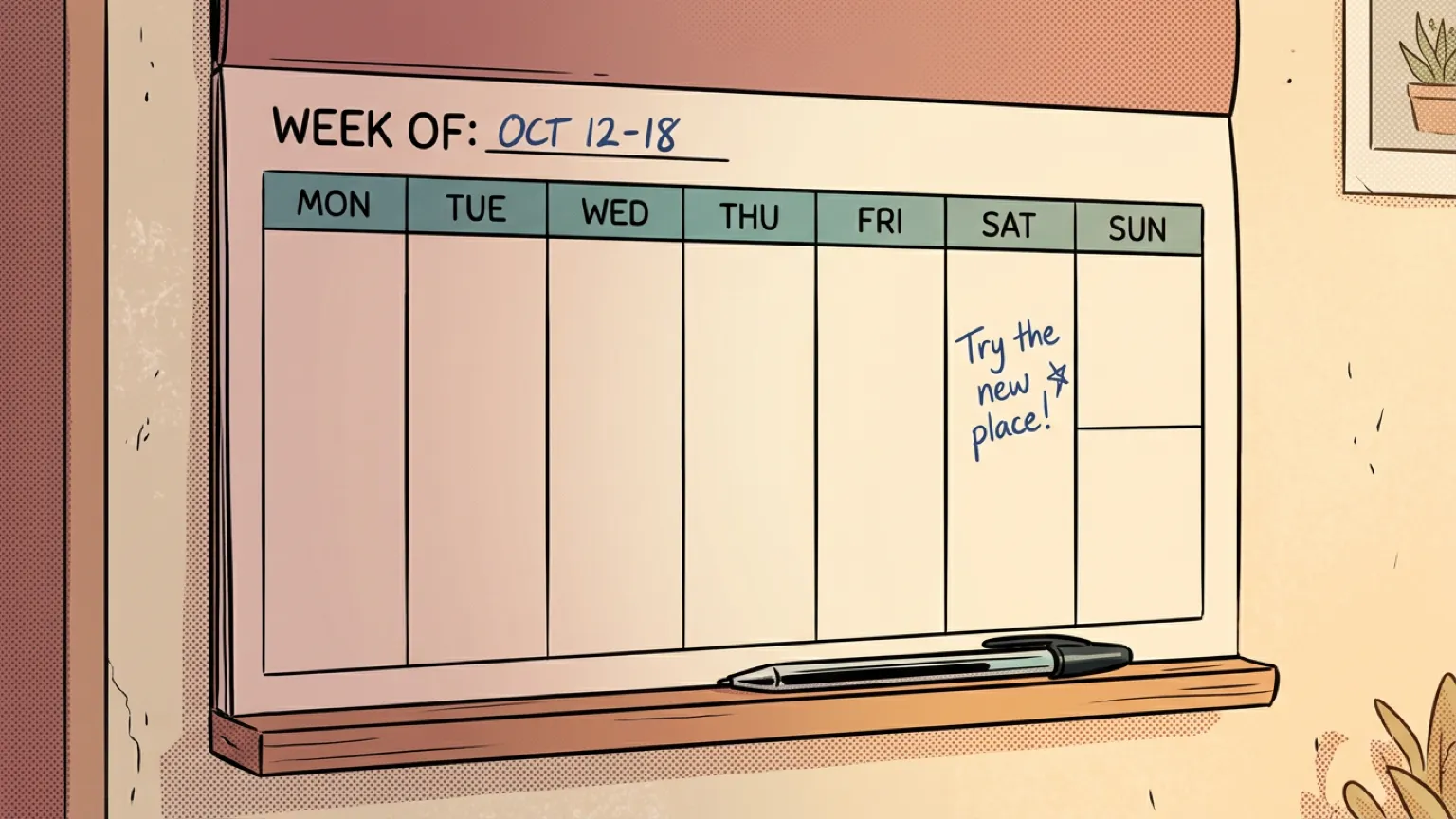
What that looks like in practice: one person picks the general plan, the other can riff on it. Keep a shared list of ideas so you're never starting from zero. Decide by Wednesday so you both get the anticipation. Leave the details loose.
That's the whole thing. Tools like Saturday Plans exist to make that even easier — turns, shared ideas, the decision made before decision fatigue kicks in — but the principle works with a notes app, a whiteboard on the fridge, or just a recurring conversation.
The point isn't to optimize your weekends. It's to stop losing them. A five-minute conversation on a Tuesday — "hey, what if we did this Saturday?" — is the difference between a weekend that happens to you and one you actually remember. That conversation is itself a small ritual worth keeping.
So try it this week. Not a spreadsheet, not a system. Just: before Wednesday, have a five-minute conversation about what next weekend could look like. See what happens.
Ready to plan your next weekend together?
Get Started
How to start a weekend tradition with your partner that survives October. September gets you the first weekend. Design gets you the rest.
Read more →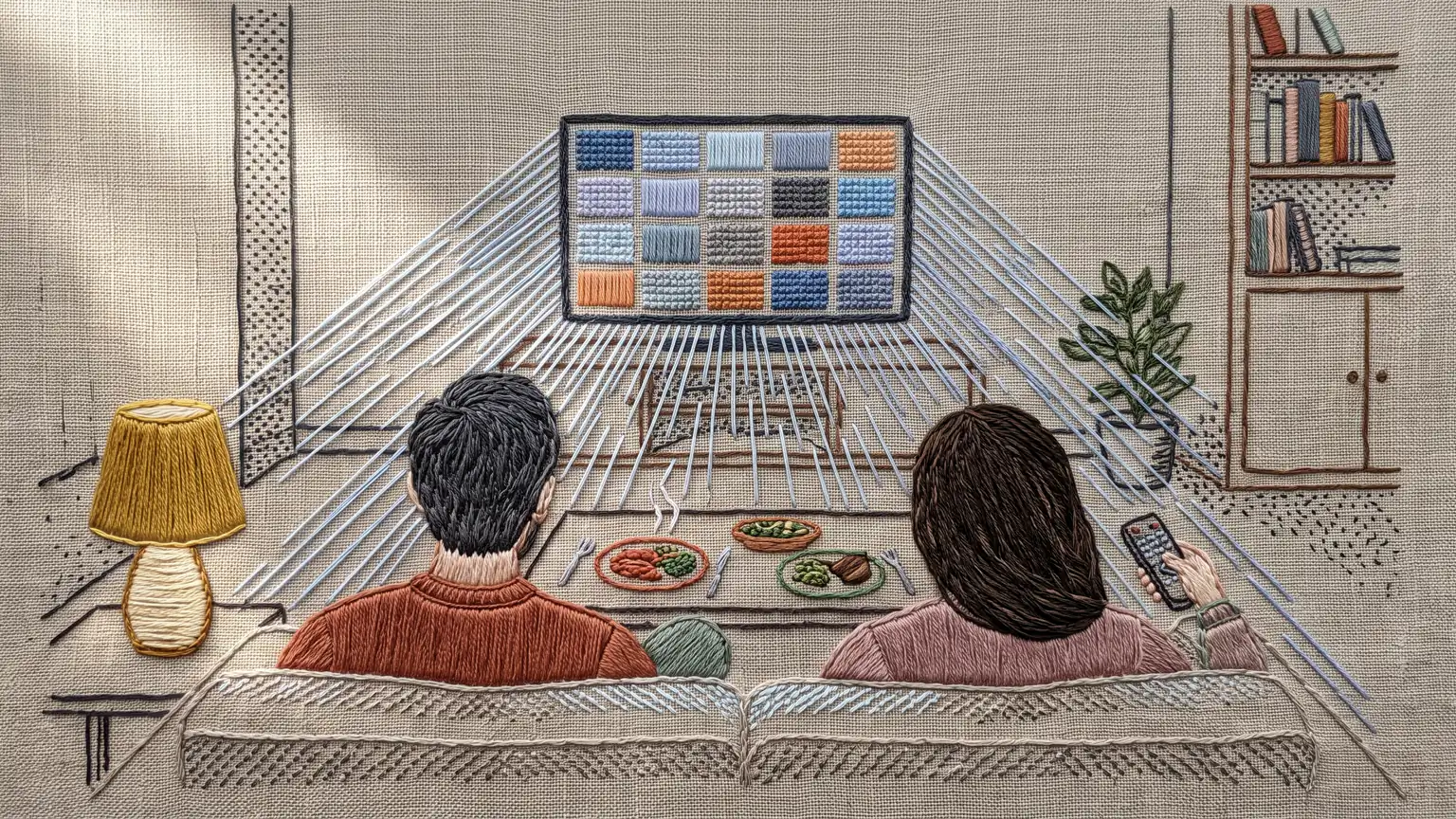
Movie night doesn't fail because you picked the wrong film. It fails in the twelve minutes of scrolling before — and the ninety seconds after.
Read more →
The best adventure this weekend might be the city you already live in. Five ways to be a tourist in your own town, together — no trip required.
Read more →