Why September Is the Best Month to Start a Weekend Tradition
How to start a weekend tradition with your partner that survives October. September gets you the first weekend. Design gets you the rest.
Read more →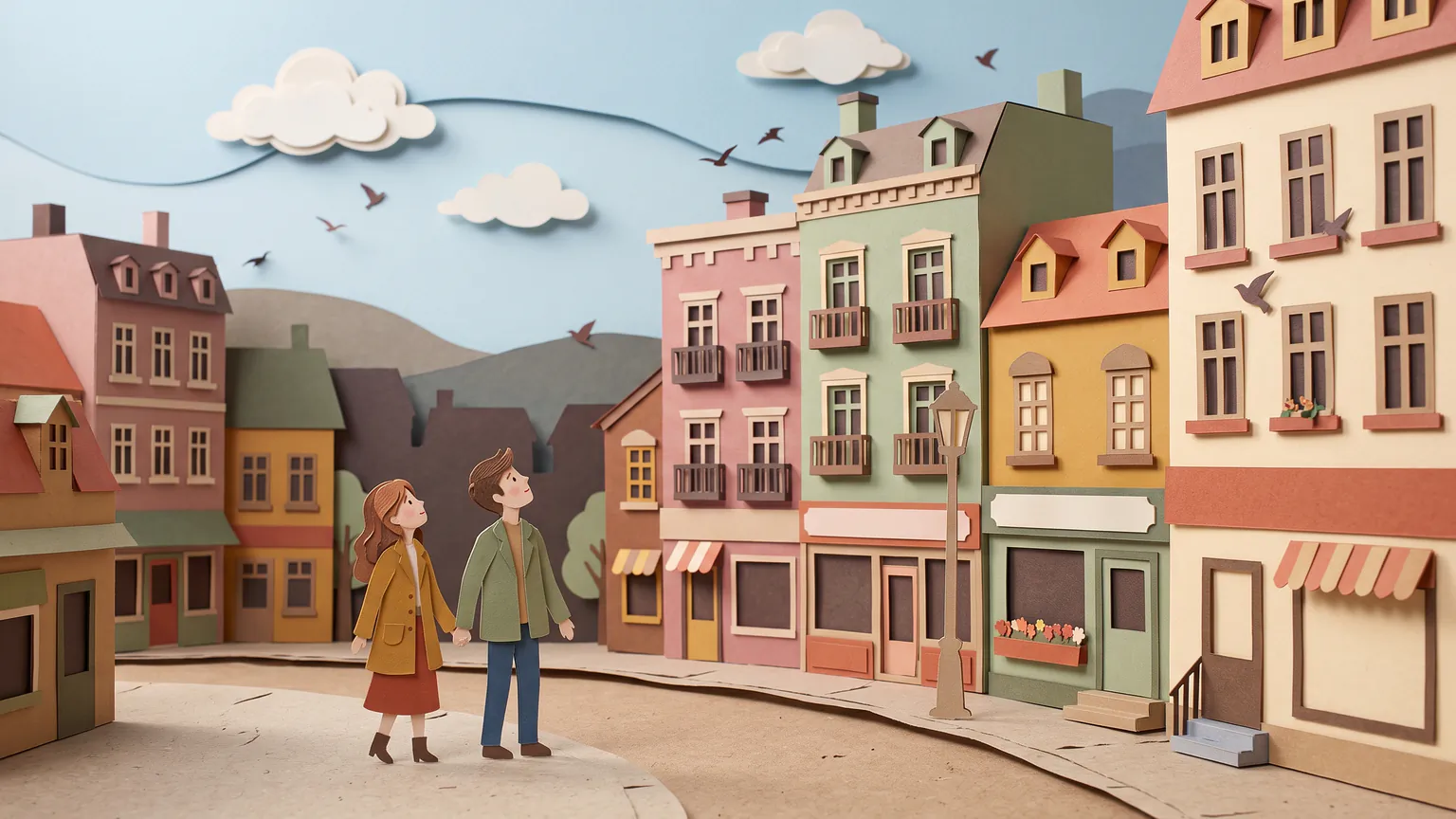
You can probably name a restaurant three neighborhoods over that you've been meaning to try for two years. There's a museum you've passed a hundred times and never gone in. A whole part of town you'd struggle to describe, because you've never had a reason to go there. You don't live in a boring place. You live in a place you've stopped seeing.
That's not a character flaw — it's how attention works. The brain is ruthless about familiar things: the commute, the corner store, the skyline out the train window all get filed under "known" and stop registering. It's the same reflex that lets you walk a familiar route without registering a single step of it. A tourist and a local walk the same block and see two different cities — the tourist sees it, you edit it out.
Here's the good news hiding in that. You don't need a plane ticket to have an adventure this weekend — you just need the tourist's eyes, borrowed on purpose, to be a tourist in your own town for an afternoon. Call it a microadventure: short, local, cheap, and, unlike a real trip, repeatable next month. (This isn't the at-home staycation, either — the bubble bath and the backyard movie have their place, but that's a different weekend. This one gets you out the door.)
What follows isn't a list of fifty things to do in your specific city — the internet has those, and they're useless the moment you move. It's a handful of moves: repeatable ways to make your own place strange and new again, together. There's real research behind that "together," too. Psychologists call it self-expansion: couples who do something genuinely novel side by side — not just pleasant, but new — tend to feel closer for it afterward, and "go explore a part of the city you don't know" is nearly the textbook example.
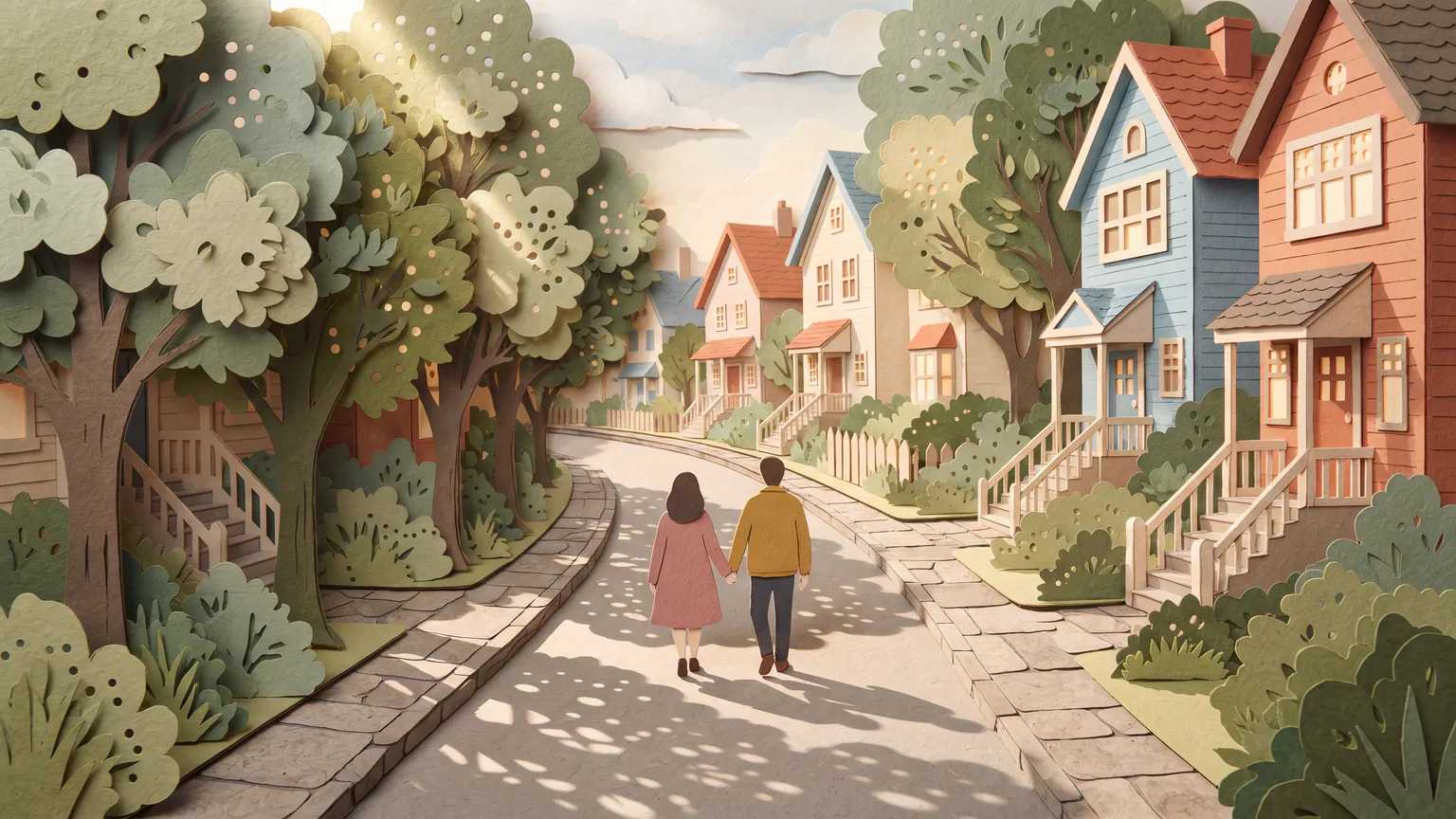
There is, almost certainly, a street within twenty minutes of your front door that neither of you has ever set foot on. Not driven through — walked. Pick one and go, with no destination and nowhere to be. That's the whole trick: at three miles an hour you notice what a windshield turns into a blur — the corner house with the wild garden, the bakery smell you'd never caught, the mural down the alley. Let yourselves get a little lost. Take the turn that looks interesting instead of the one that's efficient, and follow it until it isn't.
And a block you know cold turns strange at an hour you'd never normally pick. A neighborhood at seven in the morning — empty, gold-lit, shop shutters just rolling up — is somewhere you've technically been dozens of times and never once seen. So is that same block late on a warm evening, when everyone's out on their stoops and the light goes soft. Change the clock and you change the city for free.
Make it yours: Open a map, find the blank space between the places you already know, and start there — bonus points if you go at an hour you're usually asleep or at work.
Every town has the thing visitors travel for and locals never bother with — the observation deck, the historic-house tour, the famous overpriced pastry, the harbor boat, the museum that's free on the first Thursday. You've had "we should do that sometime" energy about it since you moved here. This weekend is sometime. Go all in: take the cheesy photo, buy the ticket, do the guided walk you've always felt a little above. Guides are the cheat code — a good one hands you a century of stories about buildings you've walked past blankly, and your ordinary commute suddenly has a secret history running under it. You'll be surprised how good the view is once you finally bother to look.
Make it yours: Each of you names one "we've lived here for years and never…" thing. Do the one that makes you both a little embarrassed.
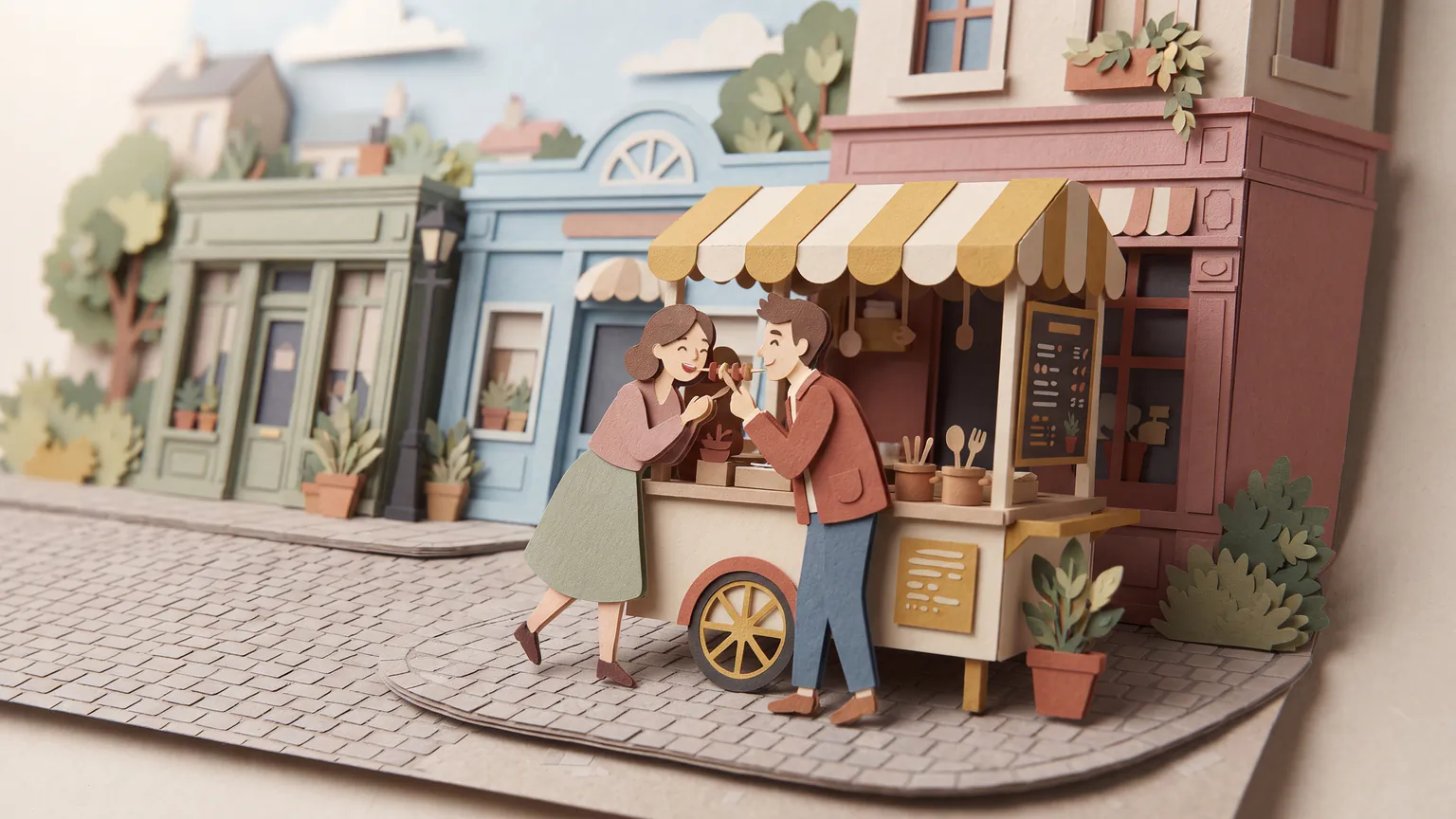
Instead of choosing a restaurant, choose a food — tacos, dumplings, a good croissant, the local thing your town is weirdly proud of — and make a small crawl of it. Share one order at three or four of the best-rated spots for it, a few blocks or neighborhoods apart. You're not there to get full; you're there to argue about which one wins. Chasing one taco to its best version is the whole tour: it drags you into corners you'd never have gone to for their own sake, past storefronts and a little park you didn't know existed, and you come home with a ranking, a favorite, and an inside joke. Talk to whoever's behind the counter while you're at it — the people who feed a neighborhood know it better than any guidebook.
Make it yours: Let whoever's turn it is pick the food; the other plans the route.
Here's a strange asymmetry: you'll happily spend an evening researching the perfect day for a friend who's coming to visit — the good coffee, the walk worth the detour, the one meal worth the money — and almost never do it for yourselves. The good stuff gets saved for guests. So don't plan your own day. Plan each other's. Each of you secretly designs a half-day in the city built around what the other actually loves — not what you'd pick — and keeps it sealed until Saturday. Then you hand it over and just go along: no input, no edits. Being planned for is a rare pleasure; so is watching someone light up inside a day you built for them.
Make it yours: Set a tiny budget and a start time, trade sealed plans the night before, and no peeking.
Somewhere in your city is the spot from an early date — the first coffee, the walk you took when you were both still a little nervous, the bench where something got decided. Go back. Order the same thing. Sit in the same place. Notice what's changed: the café, the neighborhood, the two of you. This one's less about discovery than depth — a familiar place, read a second time years later, tells you a different story, and reading it together is its own kind of tourism. It's the move that turns getting out more into a memory you'll actually keep.
Make it yours: Pick the oldest shared place you can both remember, and let the other person tell the story of that day — including the parts you'd forgotten.
None of this runs out. That's the joy of it — a city is far too big to finish, so "rediscover our own town" isn't a one-off weekend; it's a well you can go back to for years. The only real risk is the quiet one that's been killing that restaurant you've meant to try for two years: a good intention with nowhere to go just fades.
So give it somewhere to go. Keep a running list of the ones you haven't gotten to, and drop each into your shared ideas bag in Saturday Plans the moment it occurs to you — waiting for a free Saturday instead of lost in a group chat. Then take turns: one of you picks this time, the other next, so a good afternoon never rides on who's in the mood or who always ends up doing the planning.
Do one a month, and a year from now you'll have a dozen afternoons you'd otherwise never have had — the dawn-lit neighborhood, the taco you're still arguing about, the tour that rewired your walk to work. That's when it stops being a plan and becomes a ritual, the way a standing Friday walk or a Sunday-market habit does.
You don't need to go anywhere. Pick a neighborhood neither of you knows well, and go this Saturday.
Ready to plan your next weekend together?
Get Started
How to start a weekend tradition with your partner that survives October. September gets you the first weekend. Design gets you the rest.
Read more →
Movie night doesn't fail because you picked the wrong film. It fails in the twelve minutes of scrolling before — and the ninety seconds after.
Read more →
Summer date ideas sorted by what they cost: free, under $50, the rare splurge. Plus the one move that turns a saved list into a real Saturday.
Read more →